
What are the disadvantages of continuing to work in 2D?
In the modern manufacturing industry, many companies still rely on 2D drawing software, while the production world around them is becoming increasingly complex. However, this outdated way of working comes with significant drawbacks that can undermine your company’s competitiveness and efficiency.
From communication errors to costly production delays, sticking with 2D CAD systems can cost your business more than you think. Time to examine the real impact of this choice.
Why are 2D drawings no longer sufficient for modern production?
2D drawings are inadequate for modern manufacturing because they do not provide a complete representation of complex products and leave room for interpretation. Unlike 3D models, 2D drawings lack essential information about depth, assembly and component interrelationships.
The modern manufacturing industry requires speed and precision. Customers expect more and more customization and shorter delivery times. With 2D drawings, your production department must constantly guess at the correct interpretation of technical details. This leads to miscommunication between design and production, resulting in errors and rework.
Moreover, suppliers and customers are finding it increasingly difficult to visualize exactly what is being produced. In sectors such as furniture and interior design, where customization is standard, this limitation is particularly problematic. A 2D drawing of a custom cabinet, for example, does not give a clear picture of how the various parts fit together.
What errors arise from using 2D CAD software?
The use of 2D CAD software leads to three main types of errors: interpretation errors due to unclear representation, dimensional errors due to missing dimensions and assembly errors due to unclear interconnections.
Interpretation errors occur because 2D drawings often allow for multiple interpretations. A production worker may interpret a line differently than the designer intended. This is especially problematic with complex shapes or when multiple parts overlap in the drawing.
Size errors stem from the fact that 2D drawings cannot show all dimensions without making the drawing cluttered. Important dimensions are sometimes forgotten or are positioned unclearly. The result: parts that don’t fit or products that don’t meet specifications.
Assembly errors are perhaps the most costly. In 2D, it is difficult to see exactly how parts should fit together. This leads to incorrectly assembled products, damaged parts during assembly and frustration for assemblers who lose valuable time trying to figure out the correct sequence.
How does 2D CAD affect the efficiency of your production process?
2D CAD reduces the efficiency of your production process through longer lead times, more revision rounds and increased communication overhead between departments. The lack of visual clarity creates constant interruptions in production flow.
Your design process becomes significantly slower because you have to draw multiple views to fully represent one product. Each change means you have to manually update all related drawings. This is not only time-consuming, but also increases the likelihood of inconsistencies between different views.
Communication between design and production becomes inefficient because questions constantly arise about ambiguities in the drawings. Production workers regularly have to go back to the design department for clarification, which interrupts production flow and puts pressure on deadlines.
Implementing changes also becomes a challenge. In 2D, you have to make every change manually in all relevant drawings. This not only increases the chance of errors, but also makes it difficult to respond quickly to customer requirements or production improvements.
What are the costs of continuing to work with outdated 2D systems?
The cost of outdated 2D systems manifests itself in increased error costs, longer development times and missed opportunities due to limited visualization capabilities. These hidden costs can add up to 15-25% of your total production costs.
Direct costs arise from material waste when parts are produced incorrectly. Rework and reordering of materials significantly strain your budget. In addition, you lose productive hours as employees spend time sorting out ambiguities instead of actual production.
Indirect costs are often even higher. You miss sales opportunities because you can’t convince customers with realistic visualizations. In the furniture industry, for example, customers increasingly want to see what their customization will look like before they order. With 2D drawings, this is impossible.
It also weakens your competitive position. Companies that do work with modern 3D systems can quote faster, make fewer mistakes and provide better customer service. This translates directly into market share you lose to more modernized competitors.
How do you avoid the pitfalls of 2D CAD by moving to 3D?
The move to 3D CAD eliminates the major pitfalls of 2D by providing a complete visual representation, automated consistency between views and a direct link between design and production information.
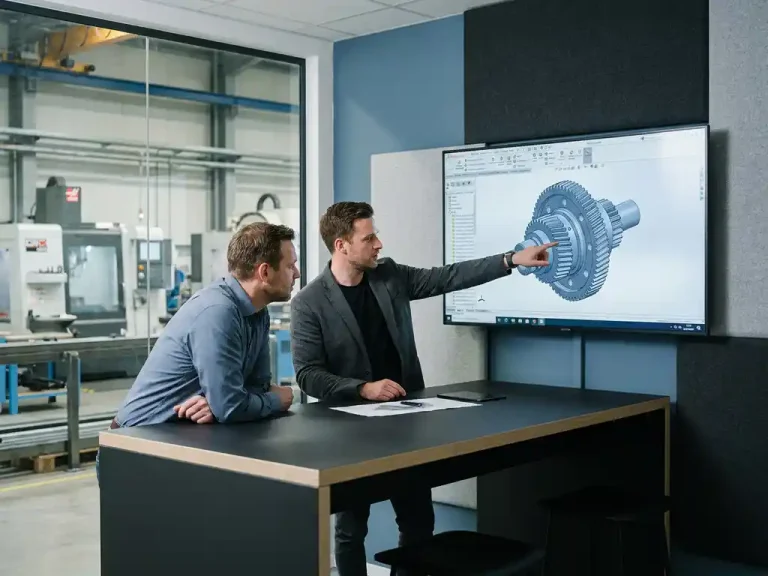
With 3D drawing, you can immediately see how all the parts fit together. This prevents assembly errors and makes communication between departments much clearer. Your production department knows exactly what needs to be made, without guesswork or differences in interpretation.
Changes are automatically made to all views and documentation. This not only saves time, but also ensures consistency. An adjustment in the 3D model automatically affects all technical drawings, cutting lists and production instructions.
Moreover, you can serve your customers much better with realistic visualizations. They can see their product before it is made, which gives confidence and reduces the chance of changes afterwards. This leads to happier customers and less stress in your production process.
How IronCAD is helping with the transition to 3D drawing
IronCAD offers the perfect solution for companies looking to leave behind the drawbacks of 2D. This revolutionary 3D CAD software combines intuitive design with powerful manufacturing integration designed specifically for the manufacturing industry.
With IronCAD, you benefit from:
- Drag-and-drop modeling that is 10x faster than traditional CAD systems
- Automatic generation of saw lists, plate optimization and NC codes
- Instant visualization for customers without technical knowledge
- Seamless integration between design and production
- Flexible adjustments even late in the production process
Ready to leave the limitations of 2D behind? Contact us and discover how IronCAD can transform your production process into an efficient, error-free workflow that strengthens your competitiveness.