How do I use 3D drawing for mechanical engineering?
Mechanical engineering requires precision and flexibility in the design process. 3D drawing has transformed this industry by enabling engineers and designers to digitally visualize complex machines and parts before they are produced. This technology eliminates costly errors and significantly reduces development times.
For machine builders, 3D drawing not only means better visualization, but also seamless integration with production processes and the ability to make adjustments quickly. From prototype to finished product, modern CAD software allows every part to be worked out in detail.
What is 3D drawing and why is it important for mechanical engineering?
3D drawing is the digital creation of three-dimensional models of objects, where length, width and height are defined in a virtual environment. In mechanical engineering, this technology is the basis for designing complex mechanical systems and parts.
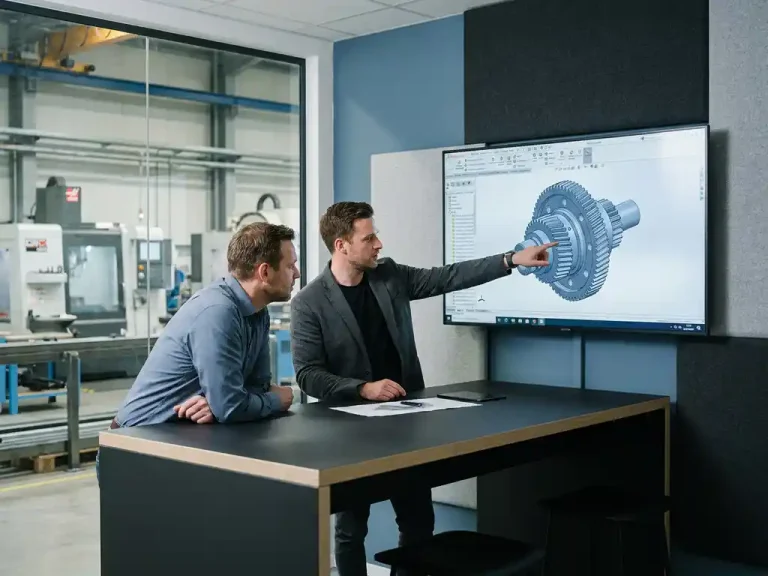
In mechanical engineering, 3D drawing is crucial because it allows designers to visualize moving parts, check tolerances and test assemblies before actual production. This prevents costly design errors and significantly shortens time-to-market. Moreover, different disciplines, such as mechanical design, electrical systems and software integration, can be coordinated within a single digital model.
The technology also provides the ability to perform simulations, such as stress analysis and motion studies, which allow the performance of machines to be optimized even before the first prototype is built. This results in more reliable and efficient machines.
Which CAD software is best for mechanical engineering?
The best mechanical engineering CAD software combines parametric modeling with flexibility for complex assemblies and offers robust simulation capabilities. Popular options include SolidWorks, Autodesk Inventor, Siemens NX and PTC Creo, each with specific strengths for different applications.
For machine builders, important criteria are the ability to handle large assemblies, kinematic simulations and integration with CAM software for production. The software must also support standard components such as bearings, bolts and profiles that are common in machine building.
A modern approach is provided by software that combines intuitive working with powerful functionality. This is especially important when designers need to develop concepts quickly and make frequent changes during the development process. The best choice depends on factors such as team size, project complexity and desired integration with other systems.
How do you get started with 3D modeling for machine parts?
Start 3D modeling for machine parts by first creating a 2D sketch of the main profile of your part and then expanding it into a 3D shape with operations such as extruding, rotating or sweeping.
Always start by defining your reference planes and creating a basic sketch that includes the main dimensions. Use constraints and dimensions to fully define your sketch before moving on to 3D operations. This provides a stable base that can be easily modified later.
For machine parts, it is essential to think in features: start with the main volume and then add details such as holes, grooves, roundings and stages. Work systematically from coarse to fine and take into account the manufacturing processes used later. Use parametric relationships to make parts intelligent so that changes are automatically reflected in related features.
What are the biggest advantages of 3D drawing in manufacturing?
The main advantages of 3D drawing in manufacturing are a drastic reduction in prototyping costs, elimination of design errors through virtual validation and automatic generation of production documentation, such as engineering drawings and NC code for machines.
3D models allow virtual prototypes to be tested before physical parts are made. This saves material costs and significantly reduces development times. In addition, assemblies can be checked for interferences and moving parts can be simulated to verify functionality.
Another major advantage is automatic document generation. From a single 3D model, technical drawings, parts lists and production instructions can be generated automatically. This eliminates inconsistencies between different documents and ensures that changes are immediately implemented in all related output. For the production floor, this means clearer instructions and less chance of interpretation errors.
How do you integrate 3D design with manufacturing processes?
Integration of 3D design with manufacturing processes is done by linking CAD data directly to CAM software to generate machine code and by using PDM systems that provide controlled data distribution to the production floor.
The first step is to set up a digital workflow that automatically converts 3D models into production instructions. This means that geometry from CAD is used directly to program CNC machines, laser cutters and other automated manufacturing equipment. This eliminates manual translation steps and minimizes the risk of errors.
For successful integration, it is important to consider manufacturing constraints already during the design process. This means that designers must collaborate with manufacturing engineers to ensure that parts are actually manufacturable with available machinery and processes. Modern CAD systems provide tools for this, such as Design for Manufacturing (DFM) checks, which automatically warn of potential manufacturing problems.
How IronCAD helps with 3D drawing for mechanical engineering
We at Dynfos offer a revolutionary approach to 3D drawing with IronCAD that perfectly meets the needs of the mechanical engineering industry. This powerful CAD solution combines intuitive design with the precision required for complex machine parts.
IronCAD offers unique benefits for machine builders:
- Drag-and-drop modeling for rapid concept development
- Combination of parametric and direct modeling in one environment
- TriBall™ visualization tool for intuitive component manipulation
- Seamless integration with production processes via automatic output generation
- Flexibility to modify designs without having to plan in advance
With IronCAD, you work without limitations and can easily modify designs, even late in the development process. The software automatically generates all necessary output, such as cut lists, purchase lists and NC codes, allowing your 3D designs to be used directly in production.
Want to discover how IronCAD can accelerate your mechanical engineering projects? Contact us for a personal demonstration and customized advice.