Can I reuse standard parts in my 3D designs?
Reusing standard components in 3D designs is an essential workflow that can save designers and engineers an enormous amount of time. Instead of modeling each part from scratch, you can take existing components from your library and apply them directly to new projects. This process not only increases the efficiency of your design workflow, but also ensures more consistency in your designs.
For companies in the manufacturing industry, the smart reuse of parts significantly speeds up the design process. From standard fasteners to complex assemblies, by building a well-organized library, you transform your way of 3D drawing from time-consuming to efficient and productive.
What are standard parts in 3D CAD software?
Standard parts in 3D CAD software are pre-modeled components that you can reuse in different designs without having to recreate them. These parts range from simple geometric shapes to complex mechanical components such as bolts, nuts, bearings and complete assemblies.
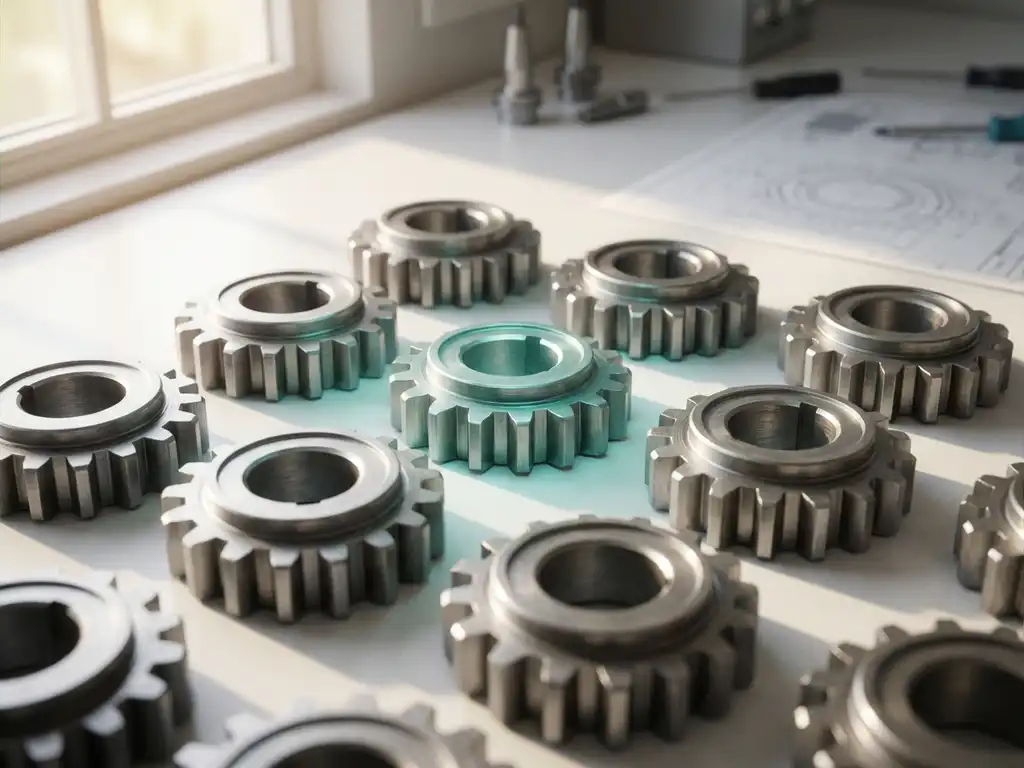
In practice, standard components consist of several categories. Mechanical components such as screws, washers and couplings form the basis of many designs. You also have basic geometric shapes such as cylinders, blocks and profiles that serve as a starting point for custom parts. Complete subassemblies can also act as standard parts, such as a standard hinge mechanism that you use in multiple products.
The major advantage of these standard parts lies in their parametric properties. You can modify dimensions, materials and other properties without re-modeling the basic geometry. This makes them flexible for different applications within your design process.
How can I add existing parts to my new designs?
Adding existing parts to new designs is usually done via a drag-and-drop system from a parts library. You select the desired part from your catalog and place it directly into your active design, then adjust its position and orientation.
Most modern CAD software offers several methods for inserting parts. The parts library lets you browse through categories and search for parts by name or properties. An alternative method is to copy parts between different project files, where you can directly copy components from previous designs.
When placing parts, it is important to pay attention to proper positioning and alignment. To do this, use the alignment tools and reference points available in your CAD software. Many programs offer automatic alignment and magnetic functions that simplify positioning and make it more accurate.
What are the benefits of reusing CAD parts?
Reusing CAD parts offers significant time savings, increased consistency and a smaller chance of design errors. By using existing, tested parts, you drastically reduce development time and ensure uniform quality across projects.
Time savings represent the most immediate benefit. Instead of spending hours modeling standard components, you can extract them from your library in seconds. This means you have more time left for the creative and critical aspects of your design, such as innovative solutions and optimization of functionality.
Consistency in designs is another crucial advantage. By using standard components, you ensure that similar components are identical in different projects. This simplifies not only production, but also the maintenance and documentation of your products.
In addition, reuse significantly reduces the risk of errors. Existing parts have often already been tested and validated, reducing your risk of design errors that only come to light later in the production process. This results in more reliable designs and less costly retrofitting.
How do I build my own library of reusable parts?
You build your own library of reusable components by systematically identifying commonly used components, standardizing them and storing them in an organized manner in an accessible directory structure. Start with the components you use most often and expand gradually.
Start by taking inventory of your current designs to recognize patterns. What components recur regularly? Consider fasteners, standard profiles or specific components that are characteristic of your industry. Make a list of these components and prioritize them based on frequency of use.
Organization is crucial to an effective library. Create a logical folder structure based on categories such as material type, function or size. Use consistent naming conventions that simplify searching. Add metadata, such as material specifications, supplier information and application areas, to find items quickly.
Ensure regular maintenance of your library. Remove obsolete components, add new ones as they arise, and update existing components as specifications change. A well-maintained library remains valuable and accurate for long-term use.
What are the limitations in reusing 3D parts?
The main limitations in reusing 3D parts are compatibility issues between different CAD systems, challenges with file size for complex parts and the risk of outdated specifications that no longer meet current requirements.
Compatibility is often a challenge when you want to exchange parts between different CAD platforms. Although neutral file formats such as STEP and IGES exist, parametric properties are sometimes lost in the process. This can mean having to re-parameterize parts after import, which negates some of the time savings.
Complex parts with lots of detail can affect the performance of your CAD system. Large assemblies with many reused components can become sluggish, especially on less powerful systems. It is therefore important to strike a balance between detail and performance, possibly by maintaining different levels of detail for different design phases.
Version control presents another challenge. When a standard component is changed, existing designs that use that component can become inconsistent. A good practice is to use version numbers and deliberately choose when to move to a newer version of a component.
How IronCAD helps with reusable parts
IronCAD offers a revolutionary approach to reusing standard parts thanks to its unique drag-and-drop functionality and extensive parts library. This 3D drawing software allows you to work efficiently and dramatically increase your productivity.
The software offers several advantages for reusing parts:
- Intuitive drag-and-drop interface for quick component placement
- Extensive standard library of mechanical components
- Flexible customization options with the TriBall™ visualization tool
- Automatic generation of saw lists and NC codes via Para-Flex
- Seamless integration between different design phases
The combination of parametric and direct modeling allows you to adapt existing parts to new specifications at lightning speed. This makes IronCAD ideal for companies in the manufacturing industry where customization and efficiency go hand in hand. Want to discover how IronCAD can speed up your design process? Contact us for a personal demonstration.