What is the best 3D software for mechanical engineering?
Mechanical engineering is one of the most technically challenging industries, where precision and efficiency are crucial. For machine builders, choosing the right 3D software is therefore essential to the success of their projects. With the right CAD software, you can design, simulate and optimize complex machines and parts before production begins.
In this guide, we answer the most important questions about 3D software for mechanical engineering and help you make the best choice for your business: from essential features to practical tips for selecting the right CAD package.
What is 3D software for mechanical engineering and why is it important?
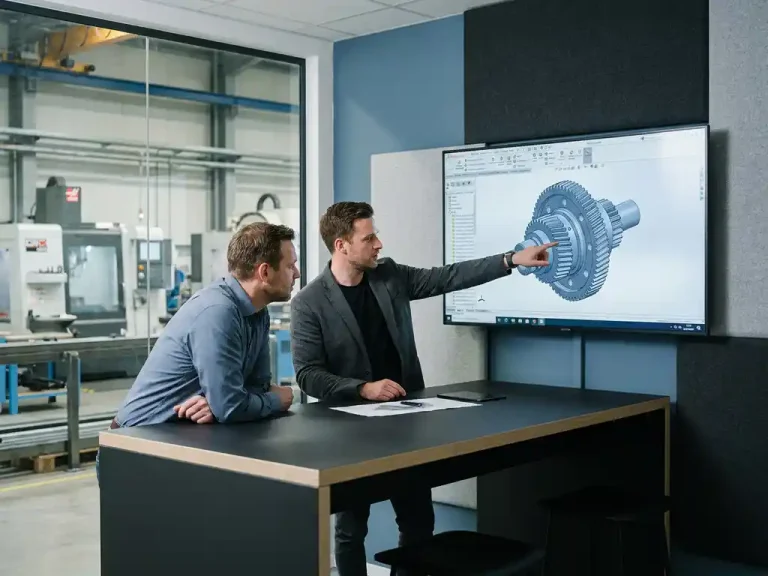
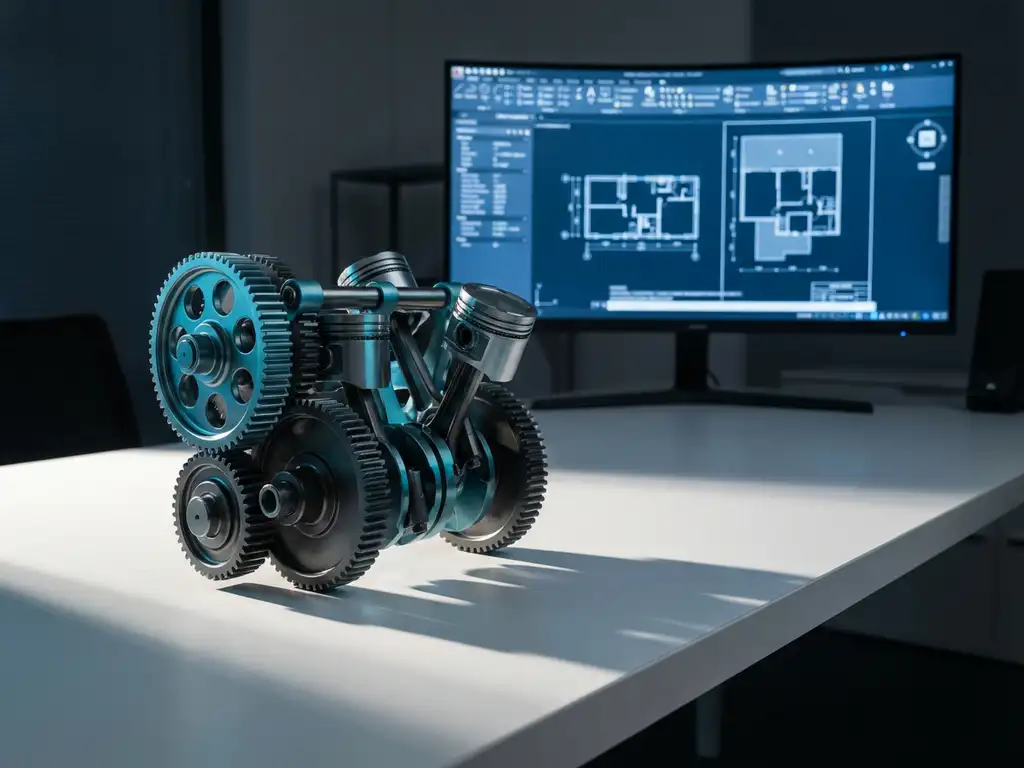
3D software for mechanical engineering is specialized CAD software that allows engineers and designers to create three-dimensional models of machines, parts and complete plants. This software enables machine builders to digitally design, simulate and test complex mechanical systems before they are physically built.
The importance of 3D software in mechanical engineering cannot be underestimated. First, it significantly reduces development time by allowing you to detect and correct errors at the design stage rather than during production. Second, it makes it possible to quickly compare and optimize different design variants.
In addition, 3D software for mechanical engineering offers crucial advantages, such as visualizing moving parts, checking tolerances and generating technical drawings. Modern CAD software also allows you to run instant simulations to verify that your design functions as intended, which can save costly prototypes.
What features are essential in 3D software for mechanical engineering?
Essential functions in 3D mechanical engineering software include parametric modeling, assembly capabilities, motion simulation and engineering drawing generation. These core functions form the basis for effective mechanical engineering design and ensure accurate and functional designs.
Parametric modeling is fundamental because it allows you to adjust designs easily by changing parameters. For example, if you change the diameter of a shaft, all related parts automatically adjust. This saves an enormous amount of time during design changes.
Assembly functionality is crucial to mechanical engineering because machines are made up of many interrelated parts. Good CAD software allows you to position parts correctly, define connections and detect interferences between different components.
Other important features include motion simulation for testing mechanisms, FEA analysis for strength calculations, and the ability to automatically generate bills of materials and engineering drawings. These features ensure that your design not only looks good, but actually functions in practice.
What is the difference between different mechanical engineering CAD packages?
The main differences between mechanical engineering CAD packages are in modeling method, user interface and specialized features. Some packages focus on parametric modeling, others on direct modeling, and still others combine both approaches for maximum flexibility.
Traditional CAD packages such as SolidWorks and Inventor work primarily parametrically, where you build a design history through features and constraints. This offers a lot of control, but can feel rigid in conceptual design phases. The learning curve is often steeper because you have to plan in advance how you will build your model.
More modern hybrid systems combine parametric and direct modeling, allowing you to work in a structured way as well as experiment spontaneously. This flexibility is especially valuable in mechanical engineering, where designs often evolve during the development process.
Packages also differ in their strengths: some excel in surface modeling for complex shapes, others in assembly management for large projects, and still others in integrated simulation capabilities. The choice depends on your specific needs and workflow.
How do you choose the right 3D software for your machine shop?
Choosing the right 3D software starts with analyzing your specific needs, budget and team skills. Consider the complexity of your projects, the desired integration with other systems and the time available for training your team.
Start by mapping out your current work processes. What types of machines do you build? How complex are the assemblies? Do you often work with modifications and variants? These questions will help you determine which functions to prioritize. For simple machines, basic modeling will suffice, but for complex automation lines, you need advanced assembly tools.
Budget plays an important role, of course. In addition to the purchase cost, you need to consider training costs, maintenance contracts and possible hardware upgrades. Some packages require powerful computers, which increases the overall investment.
Always test different packages with your own project data. Many vendors offer trial versions or demos. Pay attention to the learning curve, how fast you get results and how intuitive the software feels to your team. The best software is the one that increases your productivity the most.
Why are more and more machine builders choosing IronCAD?
More and more machine builders are choosing IronCAD because of its unique combination of speed, flexibility and ease of use. The software offers a revolutionary approach to 3D drawing, allowing you to model both parametrically and directly without limitations in your creative process.
Its greatest strength lies in its intuitive drag-and-drop interface, which allows you to quickly work out concepts and make changes. Unlike traditional CAD packages, you don’t have to lay out your entire design strategy in advance. You can start with a rough concept and gradually develop it into a detailed model.
For machine builders, flexibility with design changes is crucial. Customers often change their minds or specifications are modified during the project. With this software, you can easily make adjustments even late in the process without your entire model collapsing.
How IronCAD helps with 3D drawing in mechanical engineering
We at Dynfos understand that machine builders need software that is both powerful and accessible. That’s why we offer IronCAD as the ideal solution for 3D drafting in mechanical engineering. This software combines the best of both worlds: the precision of parametric modeling and the freedom of direct modeling.
With IronCAD, you benefit from:
- Intuitive drag-and-drop tools for rapid concept development
- Patented TriBall™ technology for easy object manipulation
- Flexible modeling without having to plan design strategy in advance
- Seamless integration between 2D and 3D design environments
- Automatic generation of technical drawings and parts lists
Whether you’re designing simple machines or complex automation lines, IronCAD adapts to the way you work instead of the other way around. Want to know how IronCAD can speed up your machine building processes? Contact us for a personal demonstration.