What is parametric design in CAD software?
The manufacturing industry is evolving rapidly, and companies that want to stay competitive need to optimize their design processes. Traditional CAD methods that require manual adjustment of each part as changes are made cost a lot of time and money. Parametric design offers a revolutionary solution to this by creating intelligent relationships between design elements.
Instead of static drawings, you create dynamic models that automatically move with your design changes. This means fewer errors, shorter lead times and more room for creativity. For companies in industries such as furniture manufacturing and interior design, where customization is the norm, this technology can make the difference between being ahead or lagging behind.
We’ll explore exactly what parametric design means, why traditional methods fall short, and how this modern approach can transform your business.
What exactly is parametric design?
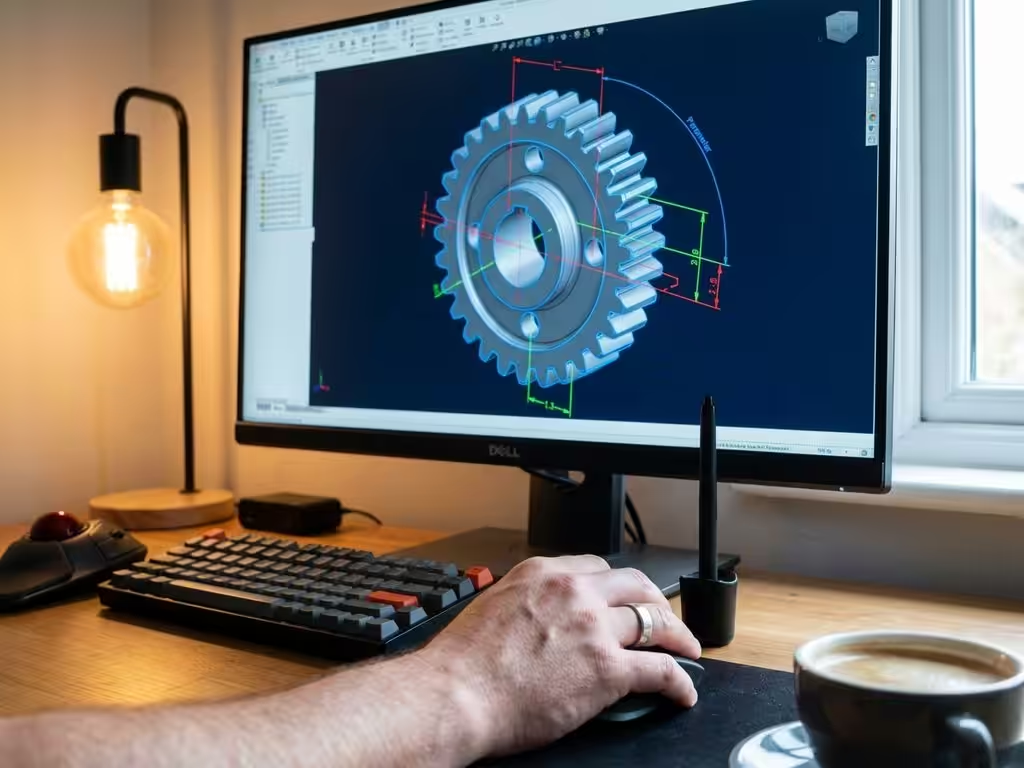
Parametric design is an intelligent design philosophy where you define relationships and rules between different parts of your 3D model. Instead of drawing separate geometries, you build a model based on parameters such as dimensions, angles and proportions that are interconnected.
The difference from traditional CAD methods is fundamental. For example, in conventional design, you draw a 100-millimeter by 50-millimeter rectangle. If you later want to adjust the width to 60 millimeters, you have to manually update all related parts. In parametric design, you define that the width should always be half the length. If you change the length to 120 millimeters, the width automatically adjusts to 60 millimeters.
The core principles of parametric modeling in modern CAD software are:
- Establish design intent through relationships between parts
- Using parameters instead of fixed values
- Automatic updates when changes occur
- Creating reusable design templates
Why traditional CAD design falls short
Static CAD models create significant challenges for modern manufacturing companies. Each part exists as separate geometry without intelligent connections to other components. This leads to time-consuming manual adjustments when customers request changes or new product variants are needed.
The biggest problems with design changes in traditional systems are:
- Forgotten adjustments in related parts
- Inconsistencies between different drawings
- Repeated re-signing of similar products
- Long lead times for simple modifications
For the manufacturing industry, where customer-specific customization is becoming increasingly important, these limitations are costly. A furniture maker who has to supply cabinets in different sizes loses a lot of time manually customizing each model. Moreover, errors occur due to human error, leading to production errors and dissatisfied customers.
These inefficiencies not only slow down the design process, but also limit opportunities for innovation and customization.
How parametric modeling transforms your design process
Parametric design revolutionizes the way you develop products by enabling automatic adjustments. When you change one parameter, all related parts automatically adjust according to your defined rules.
The tangible benefits for your business are:
- Faster design variants: Generate different product versions within minutes by adjusting parameters
- Greater flexibility: Respond quickly to customer requirements without complete redesigns
- Fewer errors: Automatic updates prevent mistakes in manual adjustments
- Reusable Templates: Build a library of intelligent models for future projects
This transformation means you can spend more time on creativity and innovation instead of repetitive modifications. Your design team can focus on solving complex challenges while the software handles routine changes.
The result is a much more efficient design process, where you can respond faster to market demands and customer-specific requirements.
Practical applications in the manufacturing industry
In the furniture industry, parametric design shows its value in producing custom cabinets and kitchens. A furniture maker can develop a master model of a cabinet in which height, width, depth and the number of shelves are defined as parameters. For each customer, he simply adjusts these values, and then the complete model, including joints and fasteners, is automatically generated.
In interior construction, the advantages are equally clear. Consider modular wall systems where the wall height, number of panels and finishing materials are variable. Parametric modeling allows one designer to quickly calculate and visualize different configurations for a variety of spaces.
Other practical examples include:
- Designing stairs with variable step dimensions and handrail heights
- Window frames in different sizes with automatic glass size calculation
- Industrial enclosures with customizable vents
- Displays and presentation furniture for different product sizes
These applications show how parametric design not only saves time, but also creates new opportunities for customization and product differentiation.
How IronCAD helps with parametric design
IronCAD offers an intuitive approach to parametric modeling designed specifically for companies in the manufacturing industry. The software combines powerful parametric capabilities with a user-friendly interface that speeds up your design process without complicated procedures.
Our solution helps your business with:
- Flexible design: Create intelligent models that automatically adapt to your specifications
- Quick product variations: Generate different versions of the same product within minutes
- Integrated workflow: Automatic generation of saw lists, purchase lists and NC codes
- Custom support: Ideal for industries such as furniture manufacturing, where each project is unique
With more than a decade of experience in digitizing production processes, we understand the specific challenges of your industry. We offer not just software, but a complete solution that fits seamlessly into your way of working.
Want to discover how parametric design can transform your business? Contact us for a personal demonstration of the possibilities.