CAD software vs manual design: which works better?
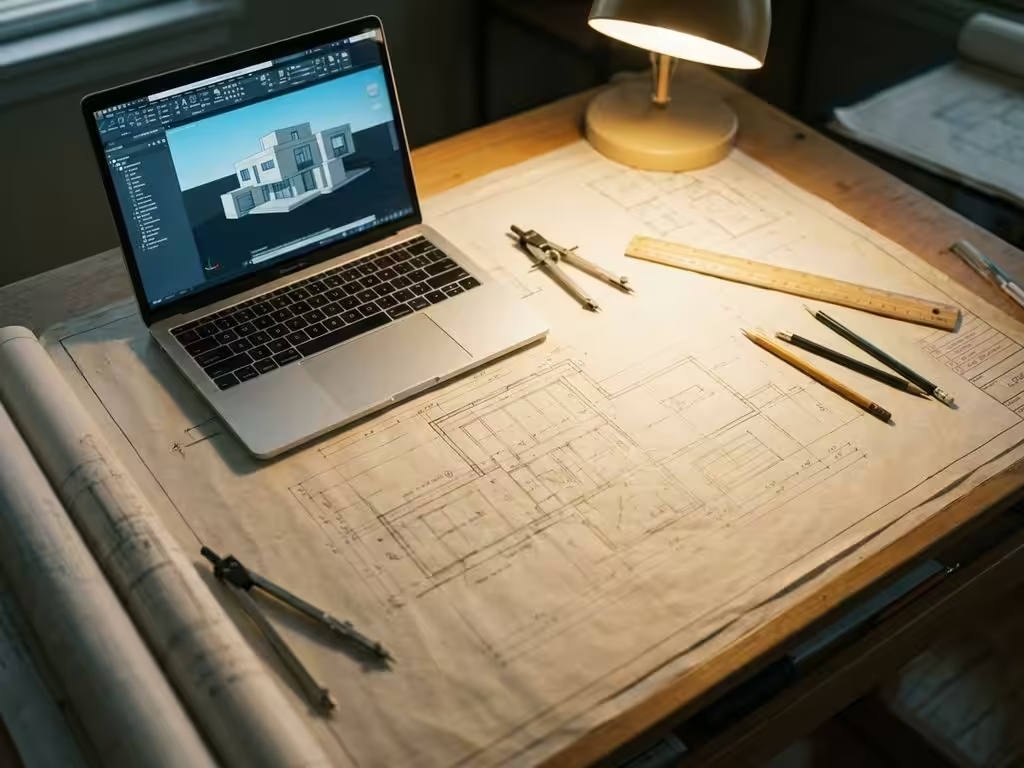
The manufacturing industry faces an important choice: stick with traditional, manual design methods or move to modern CAD software. Many companies struggle with this decision, especially since the benefits of digitization are not always immediately apparent. Manual design has worked well for many years, but modern production requirements make this approach increasingly challenging.
In this article, we explore the practical differences between the two approaches. You’ll gain insight into the limitations of manual work, the capabilities of CAD software and a fair cost-benefit analysis. We also help you choose the right solution for your specific situation.
Why manual design shows increasing limitations
Manual design was once the standard in the manufacturing industry, but is now showing increasing weaknesses. The biggest challenge is wasted time. A simple change in a manual design can mean hours of extra work because all related drawings must be modified.
Error proneness poses a second major problem. Human error easily creeps into complex designs, especially in repeated calculations or when adopting dimensions. These errors are often only discovered during production, leading to costly delays.
Scalability challenges are becoming more apparent as companies grow. Manual processes that work well for small projects become unmanageable for larger volumes. Sharing designs among team members becomes difficult, and keeping track of different versions becomes a logistical nightmare.
Modern customers also expect faster turnaround times and more customization. Manual processes simply can no longer keep up with these demands, causing companies to lose competitiveness.
How CAD software is revolutionizing the design process
CAD software is transforming the way we design by making automation and precision central. Changes to a digital design are automatically calculated and applied to all related parts. This not only saves time, but also eliminates many human errors.
Integration with manufacturing processes opens up new possibilities. Modern CAD systems automatically generate cut lists, purchase lists and even NC codes for machines. This seamless transition from design to production significantly increases efficiency.
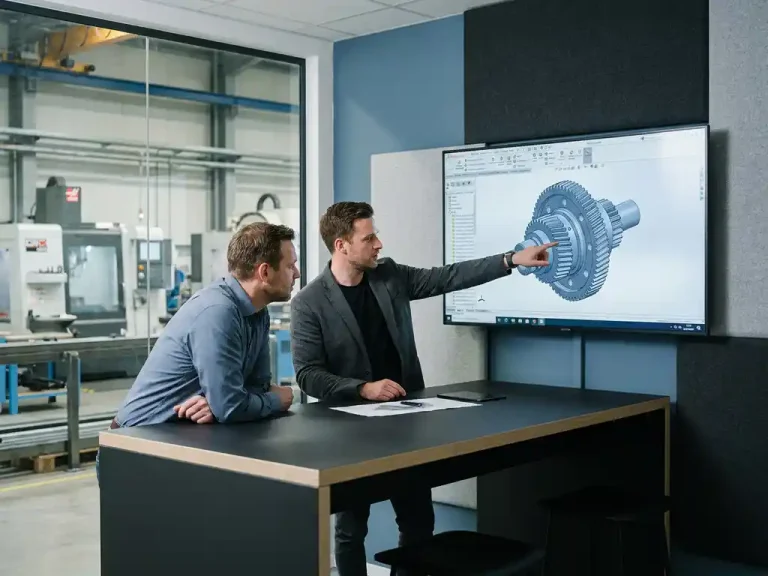
Collaboration becomes much easier with digital designs. Team members can work simultaneously on the same project, changes are immediately visible, and version control is automatic. This prevents misunderstandings and speeds up the design process.
CAD software also offers advanced analysis capabilities. You can calculate material consumption, perform strength analyses and even run simulations before you start production. These capabilities were unthinkable with manual methods.
Cost-benefit analysis: investment versus long-term benefits
The initial investment in CAD software can seem significant, especially for smaller companies. License fees, hardware upgrades and training are the major expenses. These costs vary widely depending on the solution chosen and the number of users.
However, the long-term savings often exceed the initial investment. Time savings alone can be substantial. Where a manual change takes hours, the same change in CAD software is often completed within minutes. On larger projects, these savings add up to days or even weeks.
Error reduction also delivers measurable savings. Production errors caused by incorrect drawings cost not only material, but also time and customer satisfaction. CAD software dramatically reduces these errors through automatic checks and accurate calculations.
Increased capacity is an often underestimated benefit. CAD software allows you to take on more projects without additional staff. This means more revenue without a commensurate increase in costs, shortening the payback period.
Which CAD solution best suits your business?
Choosing the right CAD software depends on several factors. Company size plays an important role. Smaller companies have different needs than large manufacturing facilities. A simple, easy-to-use solution may be perfect for a small company, while large companies need more advanced features.
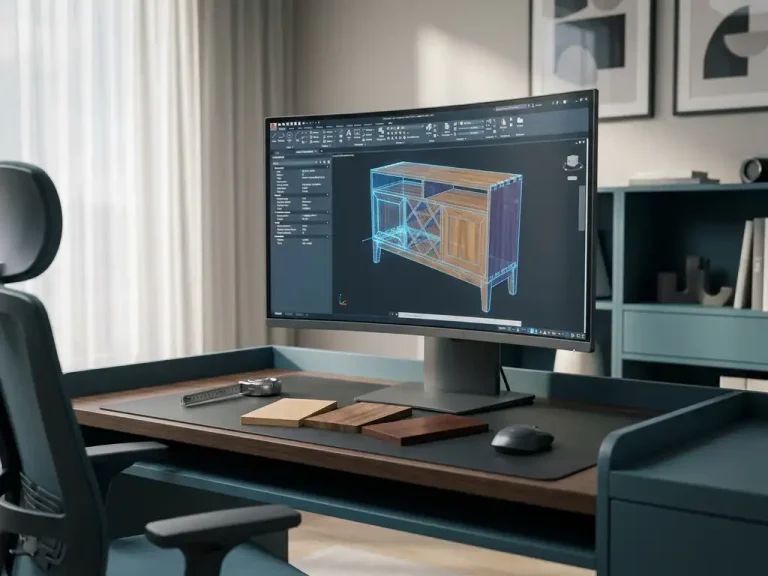
Industry-specific needs are crucial. The furniture industry has different requirements than mechanical engineering. Look for software that offers specialized tools for your industry. Consider specific material calculations, production processes or links to industry-specific machinery.
Integration capabilities with existing systems deserve special attention. CAD software that works well with your current ERP system, accounting package or production machinery delivers more value than a stand-alone solution.
Ease of use is essential to a successful implementation. The best software in the world won’t help if your team can’t work with it. Choose intuitive interfaces and good support during the transition.
How IronCAD helps with modern design challenges
IronCAD offers a revolutionary approach to 3D design that perfectly meets the needs of modern manufacturing companies. This powerful CAD software combines ease of use with advanced functionality, allowing you to design quickly and flexibly with no obstacles in your creative process.
The benefits of IronCAD for your business:
- Intuitive interface that shortens the learning curve
- Automatic generation of cut lists and purchase lists
- Seamless integration with ERP systems
- Optimized for customization and adjustments
- Ideal for the furniture industry and interior construction
Want to experience how IronCAD can transform your design process? Contact us for a personal demonstration and find out what opportunities are available for your specific situation.