How do I respond faster to customer requests with 3D drawing?
In the modern manufacturing industry, rapid response to customer requirements has become a crucial success factor. Customers today expect not only high-quality products, but also short delivery times and the ability to quickly visualize their requirements. 3D drawing plays an essential role here by dramatically speeding up the design process and improving communication with customers.
By using modern 3D drawing software, companies in the manufacturing industry can significantly reduce their response time to customer requests. Instead of spending days or weeks developing traditional 2D drawings, designers can now present realistic 3D models within hours that customers can understand and review immediately.
Why is speed so important when responding to customer needs?
Speed in responding to customer requests is crucial because it directly determines your competitive position and increases customer satisfaction. In a market where customers have increasingly high expectations, a quick response can make the difference between winning or losing a job.
The benefits of quick responses are manifold. First, you make a positive first impression on potential customers, which inspires confidence in your professionalism. In addition, you prevent customers from going to competitors who can respond quickly. In sectors such as furniture and interior design, where customization is the standard, customers often expect an initial response to their request within 24 to 48 hours.
Moreover, fast communication leads to shorter project cycles. When you can provide quick feedback on client ideas and make adjustments immediately, the entire project runs more smoothly. This results in satisfied clients who are more likely to recommend you to others, which in turn leads to more orders and growth of your business.
How does 3D drawing speed up the design process compared to traditional methods?
3D drawing speeds up the design process by enabling instant visualization and dramatically shortening iterations. Whereas traditional 2D drawings often require multiple views and extensive technical specifications, a 3D model instantly shows the complete design from all angles.
The biggest advantage lies in avoiding interpretation errors. With traditional 2D drawings, customers have to imagine what the final product will look like, which often leads to misunderstandings and costly retrofitting. With 3D models, customers immediately see what they are getting, making approvals faster.
In addition, modern 3D drawing programs make use of parametric design, where adjustments automatically carry over to the entire model. For example, if you change the dimensions of a furniture panel, all joints and connecting parts automatically adjust. This saves hours of work compared to manually adjusting multiple 2D drawings.
The ability to quickly create variants is another big advantage. With drag-and-drop functionality, you can test and show different configurations to customers within minutes, significantly speeding up the decision-making process.
What advantages does flexible 3D design offer for custom projects?
Flexible 3D design allows custom projects to quickly make adjustments and test different variants without having to recreate the entire design. This is essential for projects involving customer-specific requirements.
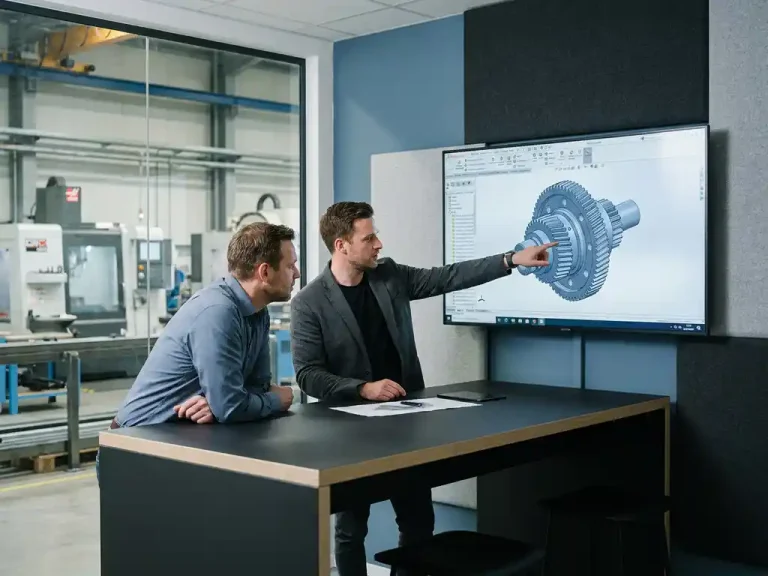
One of the biggest advantages is the ability to make real-time adjustments during customer conversations. You can make changes right on the spot and show the result, leading to faster decision-making. Customers appreciate this interactive approach because they can actively participate in the design process.
Flexible 3D software also enables modular design. You can build a library of standard components that you can use and modify over and over again. This saves time on new projects and ensures consistency in your designs. Consider, for example, standard joints, profiles or decorative elements that you can quickly apply and modify as needed.
In addition, flexible 3D designs make it easy to test different materials and finishes. The visual representation of different options allows clients to make more informed choices, leading to fewer changes at later stages of the project.
How do you communicate effectively with clients during the 3D design process?
Effective communication during the 3D design process requires regular updates, clear visualizations and involving clients in key design decisions. By using 3D models as a communication tool, you avoid misunderstandings and ensure better coordination.
Begin each project with a clear briefing in which you translate client requirements into visual references. Use 3D sketches or quick mock-ups to verify that you have understood the requirements correctly. This will prevent you from wasting time working out the wrong concepts.
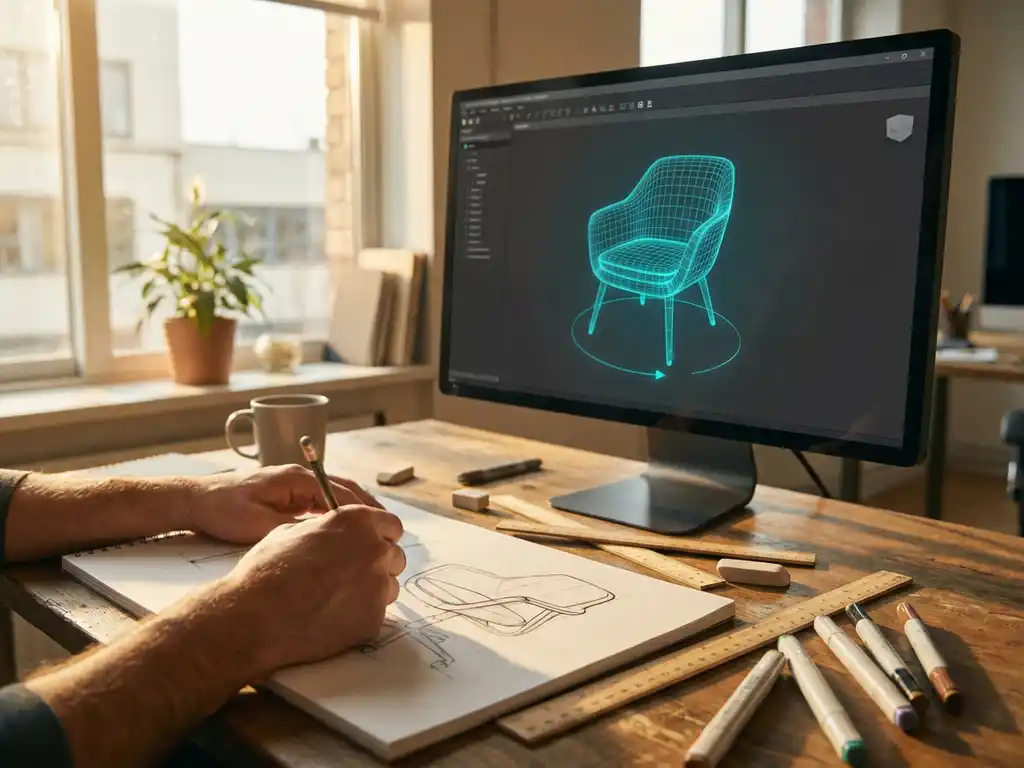
Schedule regular review moments where you show progress. Use different display modes, such as wireframes, shaded models and realistic renders, to highlight different aspects of the design. Some clients understand technical details better through wireframes, while others prefer photo-realistic images.
Document all feedback and changes systematically. Use version control so you can always fall back on previous versions if needed. After each consultation, send a summary with the points discussed and the planned next steps, including visual references of the current status.
How IronCAD helps with faster response to customer requirements
IronCAD offers a revolutionary approach to 3D design that perfectly addresses the need to respond quickly and flexibly to customer requirements. With our intuitive drag-and-drop technology, you can create realistic 3D models in minutes that clients can immediately understand and review.
Key benefits of IronCAD for rapid customer response include:
- Instant visualization: Create 3D models within minutes that customers can immediately review.
- Flexible customization: Adjust designs in real time during customer conversations with unique TriBall™ technology.
- Automatic output: instantly generate cut lists, bills of materials and NC codes for fast production.
- Modular Design: Build a library of reusable components for even faster project startup.
- Seamless integration: Link directly to ERP systems for complete process optimization.
Want to discover how IronCAD can reduce your response time to customer requirements? Contact us for a personal demonstration and experience for yourself how intuitive and powerful 3D design can be.