
What is CAD software used for?
The world of product design and manufacturing has changed dramatically in recent decades. Where engineers and designers used to spend hours at the drawing board with pencil and ruler, they now work with sophisticated digital tools that have dramatically changed the design process. CAD software has been central to this transformation and has become an indispensable tool for companies in virtually every industry.
From manufacturing to architecture, automotive to furniture production, CAD software helps professionals design faster, more accurately and efficiently. In this article, you’ll discover exactly what CAD software is used for and how it can improve your business processes.
What is CAD software and why do companies use it?
Computer-Aided Design (CAD) software is a digital tool that allows you to create, edit and optimize 2D drawings and 3D models. It replaces traditional drawing methods with a powerful digital environment in which designers can bring their ideas to life.
The evolution from technical drawing to digital design began in the 1960s, but only in the last two decades has CAD software become truly accessible to companies of all sizes. Modern CAD programs offer not only drawing tools, but also advanced features such as simulation, material calculations and automatic document generation.
Companies today simply cannot compete without CAD software. The market demands shorter development times, higher quality and more customization. Manual drafting has become too slow and error-prone for the modern production cycle. CAD software enables companies to develop complex products, implement changes quickly and collaborate seamlessly with suppliers and customers.
The main applications of CAD software in different industries
CAD software finds application in numerous industries, each with specific needs and challenges. In the manufacturing industry, it is used to design machines, parts and complete production lines. Consider developing new tooling, optimizing existing components or creating custom solutions for customers.
The architecture industry uses CAD software for building design, from simple homes to complex skyscrapers. Architects can create 3D visualizations, work out construction details and generate construction drawings that comply with all regulations.
In the furniture industry, CAD software plays a crucial role in designing cabinets, kitchens and interior solutions. Furniture makers can quickly try out different configurations, optimize materials and generate production drawings.
The automotive industry would be unthinkable without CAD software. From body design to engine components, every car in the world is designed using advanced CAD tools. CAD software has also become indispensable for developing innovative products in the aerospace, shipbuilding and electronics industries.
What benefits does CAD software offer for product design and manufacturing?
The biggest advantage of CAD software is the enormous time savings it provides. Changes that used to take hours are now made within minutes. You can quickly compare different design variants side by side and choose the best solution without having to redraw each time.
Cost reduction is a direct result of this efficiency. Less time spent drawing means more time for innovation and customer service. In addition, CAD software helps prevent material waste through accurate calculations and part optimization.
The accuracy of digital designs far surpasses manual drawings. CAD software works with exact dimensions, automatic constraints and built-in checks that prevent errors. This results in fewer production errors and higher quality of the final product.
Collaboration is dramatically improved by CAD software. Teams can work simultaneously on the same project, changes are automatically synchronized, and everyone always has access to the latest version. This is especially valuable on complex projects with multiple disciplines.
How CAD software increases productivity in the manufacturing industry
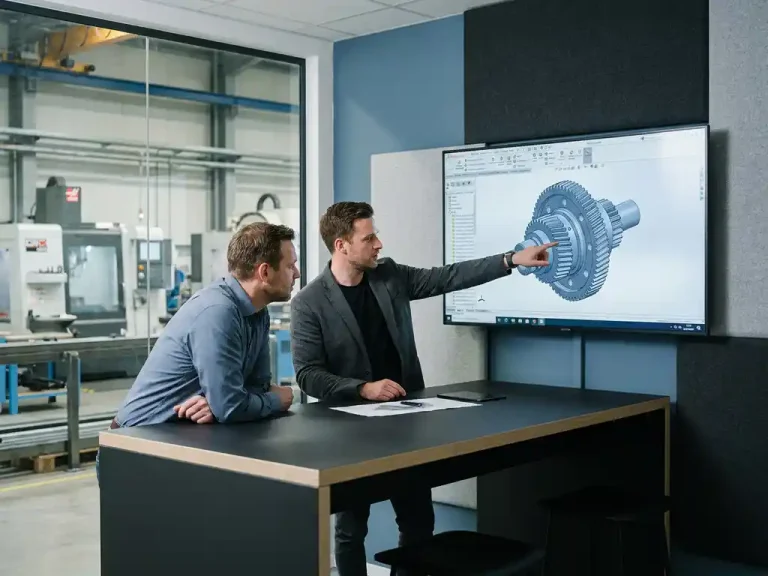
In the manufacturing industry, CAD software optimizes the complete workflow from concept design to production. The process begins with the digital development of ideas, where designers can quickly make iterations and incorporate feedback. 3D modeling enables virtual testing of products before physical prototyping.
Integration with CAM (Computer-Aided Manufacturing) systems provides a seamless transition from design to production. CAD software can automatically generate machining programs for CNC machines, drastically reducing programming time and reducing the likelihood of errors.
ERP systems can interface directly with CAD software, generating bills of materials, cost calculations and schedules automatically. This creates a fully integrated workflow in which all business processes are interconnected.
Automatic generation of documentation is an often underestimated benefit. Workshop drawings, assembly instructions and parts lists are automatically updated when the design changes. This prevents errors and ensures that production is always working with the correct information.
How IronCAD helps with efficient design
IronCAD offers a revolutionary approach to 3D design that perfectly meets the needs of the modern manufacturing industry. Our software combines powerful design tools with an intuitive interface that supports rather than hinders your creative process.
With IronCAD, you benefit from:
- Flexible design tools that enable rapid customization and iteration
- Seamless integration with ERP systems for complete process automation
- Automatic generation of saw lists, purchase lists and NC codes
- Optimized workflows, especially for the furniture industry and customization
Want to discover how IronCAD can improve your design processes and increase your productivity? Contact us for a personal demonstration and discover the possibilities for your business.